
Pioneering Certified Basil Seeds in America
Single-ingredient whole food, harvested seasonally, tested independently, and transparent by design.
Verified Beyond Organic
〰️
Certified Clean
〰️
Verified Beyond Organic 〰️ Certified Clean 〰️
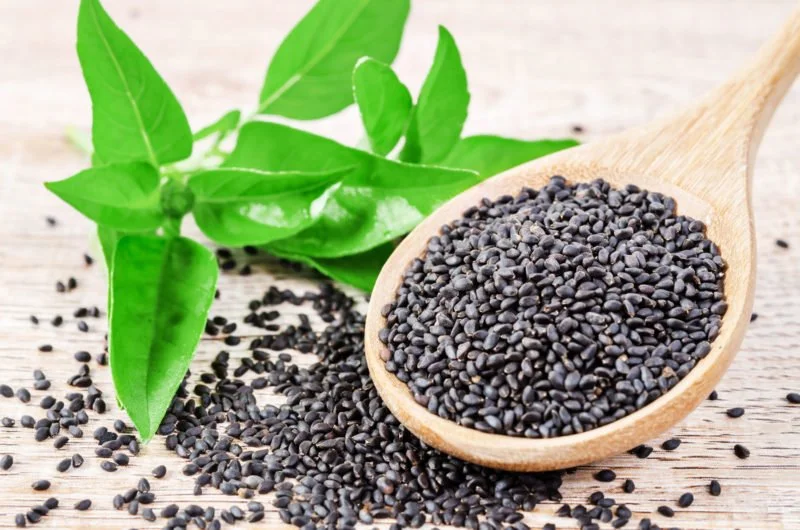
America’s first and only certified and third part tested basil seeds
MEET ZEN BASIL
Zen Basil is America’s first and only certified basil seed. Before Zen Basil, no USDA-recognized nutrition data existed for basil seeds. We pioneered the first verified nutrition profile through three years of research built on a decade of exclusive farming, testing, and traceability.
Direct Sourcing & Supplier Qualification
Established through multi-year evaluation
Between 2015 and 2018, Zen Basil conducted a structured, multi-year process to identify and qualify direct agricultural suppliers.
This process included:
Review of farming and harvesting practices
Evaluation of soil and water inputs
Assessment of post-harvest handling and storage conditions
The Historical Record
The first credible nutrition data on basil seeds
In 2019, the first widely cited article discussing the nutritional value of basil seeds in the U.S. was published by Healthline. At the time, there was no verified nutrition data available for basil seeds within the USDA database, nor were there standardized testing protocols for edible basil seeds sold in the American market. The nutritional values referenced in that article were sourced directly from Zen Basil’s original packaging (Basil Seed Works Inc. DBA Zen Basil) based on exclusive third-party laboratory testing conducted on our verified edible basil seeds. At that time, no other basil seed products in the U.S. had published, validated nutrition data matching these values.
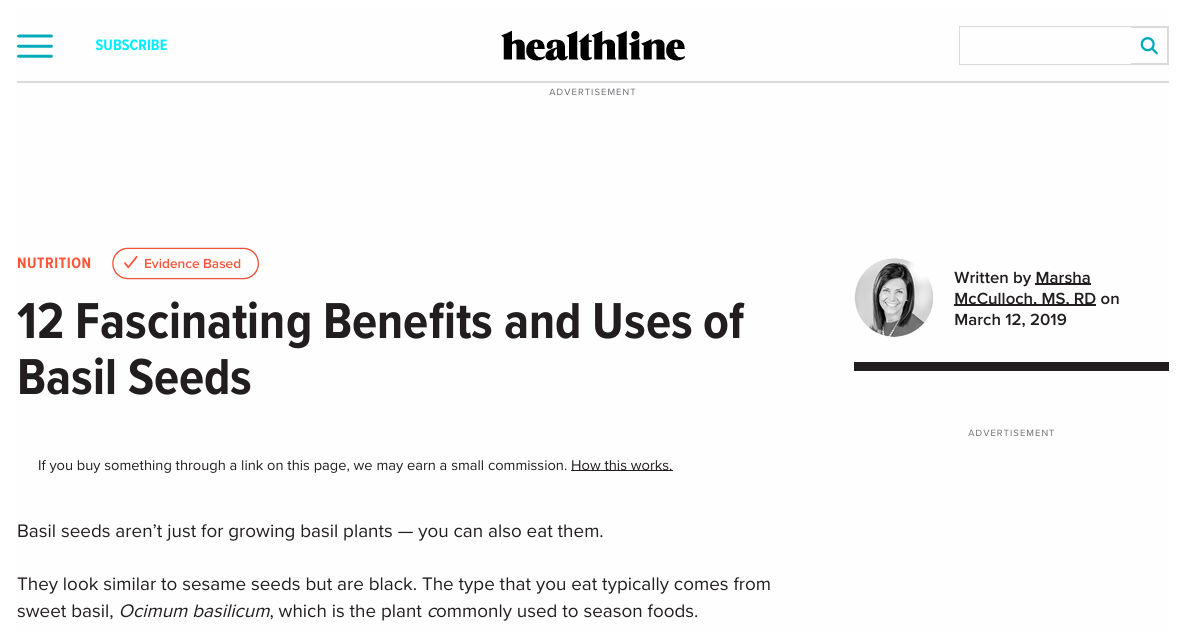
Healthline’s 12 Fascinating Benefits and Uses of Basil Seeds (Zen Basil Seeds)
By 2018, Zen Basil established a direct-sourcing model that allows ingredients to be procured without intermediary wholesalers. Zen Basil’s nutritional profile became the introduction to Healthline’s 12 Facts about Basil Seeds. See Zen Basil’s exclusive nutritional fact sheet from 2019.
For more than a decade, Zen Basil has helped define the nutritional understanding of edible basil seeds—an ingredient largely unfamiliar to the U.S. market at the time.
Through sustained research, education, real-world use, and original family recipes, we introduced health and wellness influencers, registered dietitians, physicians, and everyday health seekers to the idea that basil seeds are meant to be eaten.
Today, we’re honored to have earned the trust of our community, reflected in over 4,000 five-star reviews on Amazon.
Some brands have copied nutritional claims or generalized other basil varieties, misleading people into thinking all basil seeds have what Zen Basil does. That’s not true. Our nutritional profile comes from a unique seed we exclusively source, verified through direct farming relationships and seed-specific Certificates of Analysis. When others imitate our nutritional facts without our seed, they misrepresent the reality. Not all basil seeds are alike, and Zen Basil can’t be copied.
Thank you for being part of the Zen Basil journey.
Zen Basil Seeds
The first only third-party lab tested basil seeds
Glyphosate-Specific Analysis
Conducted as a separate test
Glyphosate is not included in all multi-residue pesticide panels due to its unique analytical requirements.
For this reason:
Zen Basil conducts glyphosate-specific testing as a separate analysis
Testing is performed by independent laboratories using validated methods
Results are evaluated against internal specifications
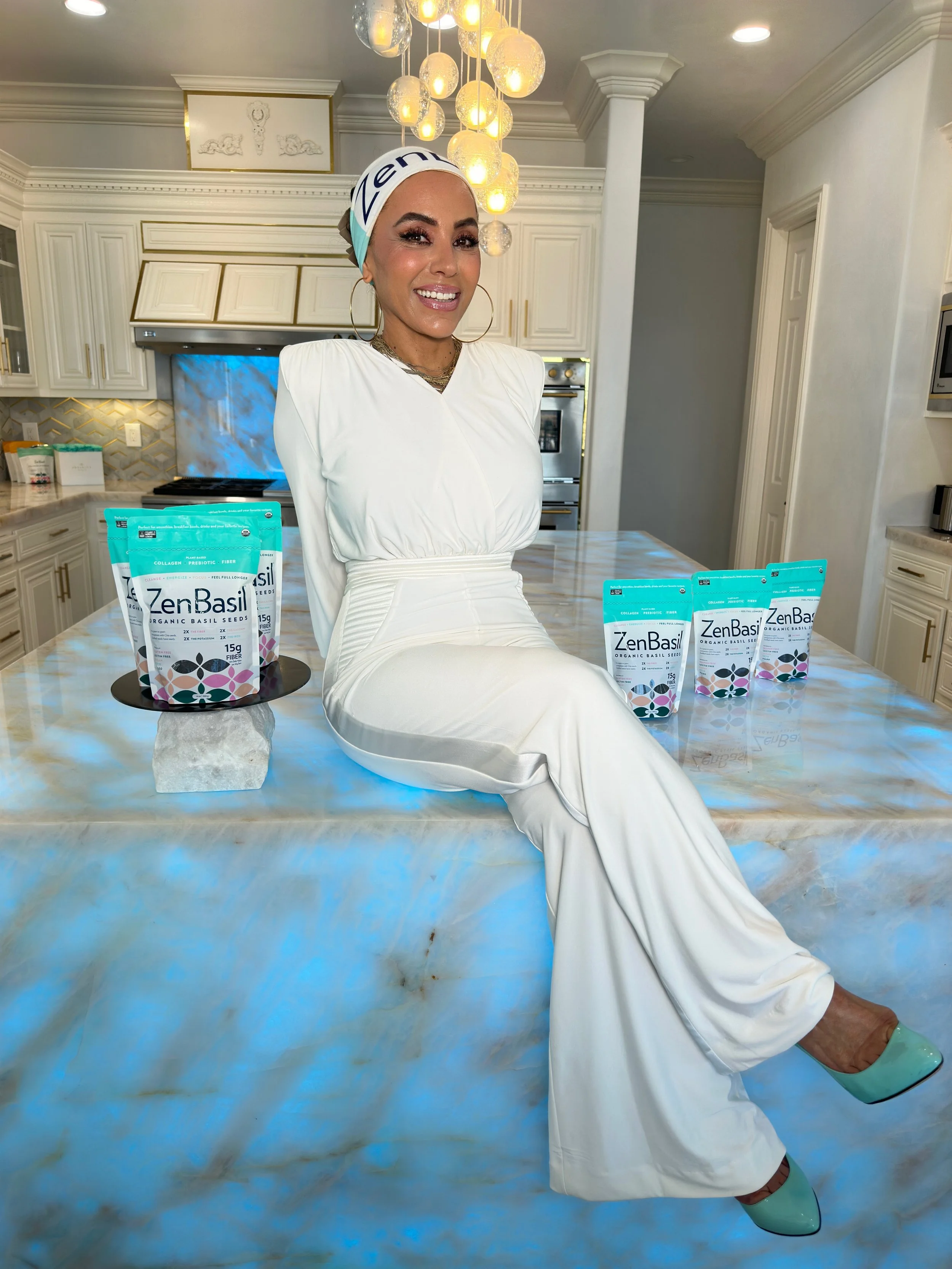
Founder of Zen Basil, Shakira Niazi
Founder’s Message
Zen Basil is a mother and sons team devoted to protecting these seeds and the integrity behind them. They have been a game changer, unprocessed nutrient dense, and naturally rich in fiber that truly works. And here’s the truth: “Clean” and “organic” means nothing without the certification. without a COA trust is compromised. I’ve safeguarded these seeds for over a decade to ensure the purity you deserve.
Gratefully,
Shakira
Why Is Everyone Suddenly Talking About Fiber—and Why Do Top Doctors Trust Zen Basil?


If you’ve read Good Energy by Dr. Casey Means (General Surgeon, Nominee, United States 2025), you may have noticed something surprising: basil seeds are mentioned eight times—not as a sponsorship, but as a real solution she uses herself.
Dr. Casey Means calls fiber one of the most powerful, affordable tools for reversing chronic disease—and credits Zen Basil with introducing her to basil seeds as food.
And she’s not alone.
Real Praise—Without a Price Tag
The level of unsponsored support for Zen Basil has been incredible:
Levels, the glucose-monitoring brand, has repeatedly highlighted basil seeds—specifically naming Zen Basil—with zero sponsorship or payment.
Countless dietitians, metabolic health advocates, and fiber-focused professionals have publicly named Zen Basil their favorite brand—purely on merit.
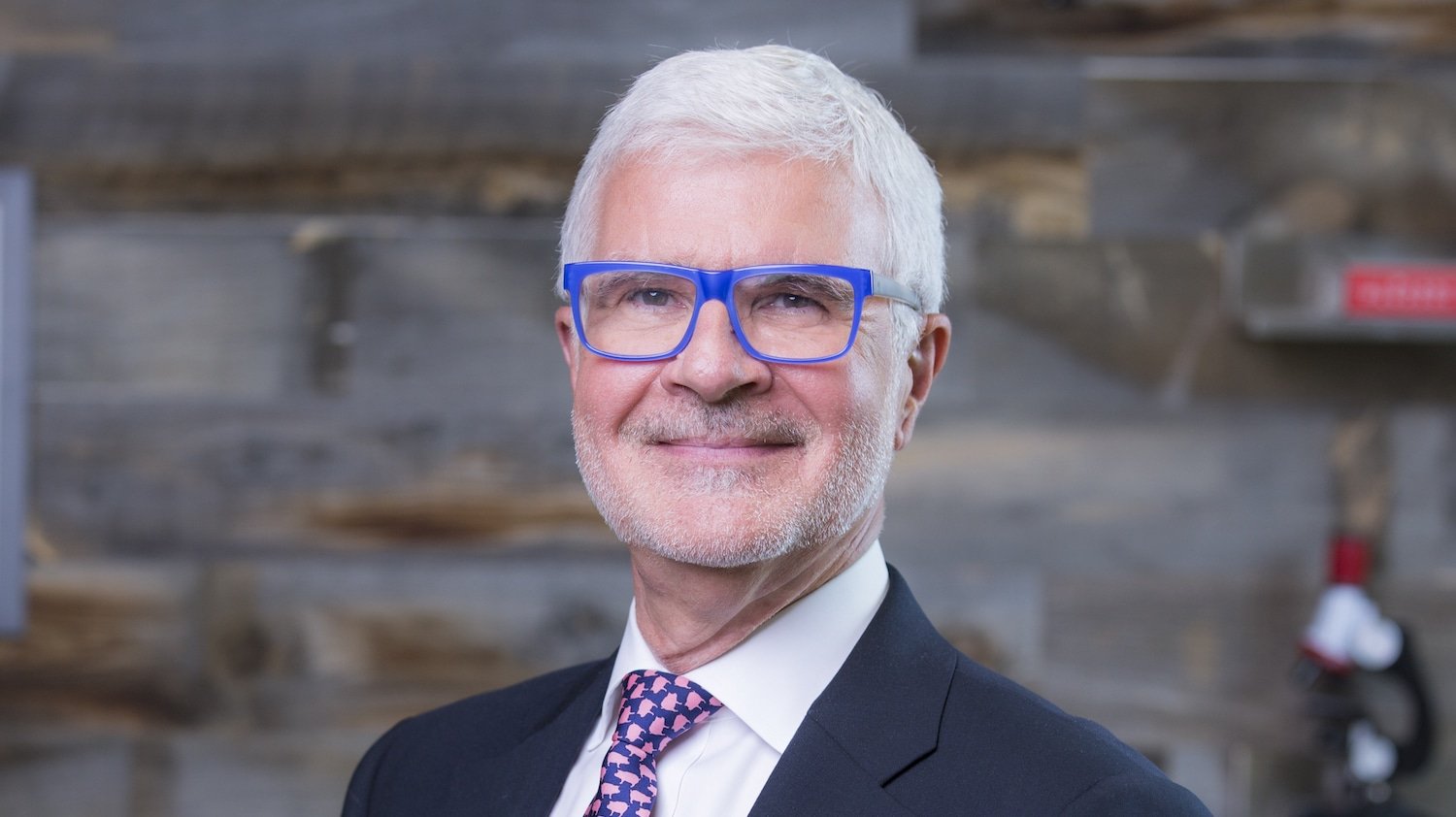
📚 Dr. Steven Gundry, author of The Plant Paradox, recommends basil seeds over chia for their superior digestibility and lower inflammatory load. He has repeatedly cited Zen Basil as his favorite real superfood.
🧠 Dr. Robert Lustig, a pioneer in metabolic health, says:
"Fiber is the most important nutrient for reversing obesity and insulin resistance."
"Half the cure for obesity is fiber."
Plain-sight science
Fiber is foundational for metabolic health.
Decades of cohort research and meta-analyses show that higher dietary fiber intake is consistently associated with:
Lower all-cause mortality
Lower cardiovascular mortality
Lower cancer mortality risk
Meta-analyses link higher fiber intake to significantly reduced mortality risk.
Large, long-running cohort studies show meaningful risk reductions per ~10 g/day increases in fiber intake.
Fiber supports microbial fermentation and short-chain fatty acid (SCFA) production—core biological mechanisms behind metabolic health benefits.
Good Energy / Lustig context
Dr. Casey Means highlights fiber as a core pillar of metabolic health meals and cites Dr. Robert Lustig describing fiber as “half of the solution” to obesity—while noting that most Americans fail to meet even modest USDA fiber targets and that higher intakes (e.g., ~50 g/day) may be ideal for many.
Whole foods aren’t the same as isolated ingredients
Whole-food fiber
Comes with the natural food matrix
Supports diverse gut microbes
Slower, steadier fermentation signals
Isolated fibers (inulin, gums, powders)
Extracted and processed
Narrow microbial substrate
Different microbiome effects
Not equivalent to whole-food synergy
(Educational comparison, not a value judgment.)
How food is grown matters — and why testing still matters
Organic certification is an important standard for farming practices, but it does not automatically mean “pesticide-free” or “glyphosate-free.”
Verification requires testing.
Why this matters
Because pesticide exposure can disrupt the gut ecosystem and gut integrity—undermining the same microbiome pathways that fiber relies on to deliver metabolic benefits.
Pesticides and glyphosate can disrupt the microbiome
The microbiome is a living ecosystem; chemical exposures can shift which bacteria thrive.
Reduced microbial diversity and impaired fermentation can weaken metabolic signaling.
If the gut ecosystem is disrupted, fiber’s benefits can be diminished—because fiber works through microbes.
Why this matters for women
Women’s metabolic health is closely tied to gut health, inflammation, stress physiology, and hormonal transitions.
When the microbiome is disrupted, it can intensify common challenges many women experience—especially during perimenopause and menopause—such as:
Weight resistance
Fatigue
Mood instability
(Educational context, not medical claims.)
That’s why a women-led company built around a single ingredient chose to make verification public.
Our verification standard
Built for trust
Single-ingredient supply chain (no blends, no brokers)
Seasonal harvest control (fresh harvest, not stockpiled mixes)
Pre-pack testing + post-pack verification
Dedicated glyphosate report (separate from pesticide panels)
Public PDFs (customers and retail partners can verify)
Our scientific record
Primary-source timeline
2015–2017: Built the first verified nutrition documentation for edible basil seeds in the U.S. market (brand-specific, lab-verified).
2021: Updated nutrition documentation to reflect FDA label law updates (brand-specific verification).
2026: Publishing a new transparency standard: public pesticide and glyphosate reports twice per year.
Important clarification
Zen Basil nutrition documentation and lab reports apply only to Zen Basil products and verification.
Data is not transferable to unrelated products without matching sourcing and testing.
COA Downloads
Science & Evidence You Can See
1) Fiber & Longevity
Meta-analysis evidence
Higher dietary fiber intake is consistently associated with lower all-cause and cause-specific mortality across large populations.
Study
Dietary fiber intake and mortality: systematic review and meta-analysis of prospective studies
🔗 https://pubmed.ncbi.nlm.nih.gov/38011755/
Key point
This meta-analysis evaluates multiple long-term prospective studies and shows significant reductions in mortality risk with higher fiber intake—primarily from whole-food dietary patterns, not isolated fiber powders.
2) Fiber & Metabolic Disease
Long-term cohort evidence
Incremental increases in dietary fiber intake are linked to improved metabolic health outcomes and reduced disease risk over time.
Study
Dietary fiber intake and mortality in the NIH–AARP Diet and Health Study
🔗 https://jamanetwork.com/journals/jamainternalmedicine/fullarticle/227566
Key point
Large-scale cohort data shows that each increase in fiber intake is associated with reduced risk of age-related disease and mortality—again, primarily from whole-food sources.
3) Microbiome & Fiber Mechanism
Scientific review
Fiber’s health benefits depend on an intact and diverse gut microbiome.
Study
Dietary fiber and the human gut microbiota: mechanisms and health implications
🔗 https://www.ncbi.nlm.nih.gov/pmc/articles/PMC8303141/
Key point
This review explains how fiber supports short-chain fatty acid (SCFA) production, microbiome integrity, and immune and metabolic signaling—demonstrating biological mechanisms, not just correlations.
4) Why Processing Matters
Whole food vs. isolated fiber
Highly processed fibers and isolated oligosaccharides behave differently in the gut than whole-food fiber.
Study
Effects of dietary fiber type on fermentation and regulation of gut microbiota: a review
🔗 https://pubmed.ncbi.nlm.nih.gov/26772580/
Key point
Not all fiber functions the same. Whole-food fiber feeds a broader range of gut microbes, while isolated fibers often have narrower, less complex effects.
Food Contamination & Gut Health
5) Microbiome Disruption by Chemicals
Environmental chemical exposures, including pesticides, can alter gut microbiome balance.
Study
Impact of environmental chemicals on the gut microbiome
🔗 https://www.ncbi.nlm.nih.gov/pmc/articles/PMC5806217/
Key point
This review explains how environmental chemicals interact with the gut ecosystem—providing foundational context for why independent residue testing matters.
Glyphosate & Microbial Systems
6) Glyphosate and Microbial Pathways
Peer-reviewed analysis of glyphosate’s impact on microbial communities.
Study
Glyphosate effects on microbial communities: a review
🔗 https://www.sciencedirect.com/science/article/pii/S0048969719369982
Key point
Glyphosate has measurable effects on microbial systems, supporting why glyphosate testing should be separate from standard pesticide panels.
THE REAL BASIL SEED FACTS
Before Zen Basil, basil seeds had no verified nutrition data in the U.S. Today, misinformation is everywhere. Here is the truth.
1. Are basil seeds good for you?
Yes — Zen Basil seeds are. Since they are edible basil seeds used as food, unlike “holy basil seeds.”
Edible basil seeds (the kind Zen Basil uses) are naturally:
High in fiber
High in complete protein
Rich in omega-3 (ALA)
Packed with polyphenols and antioxidants
These benefits come from lab-tested, food-grade edible basil seeds — not from holy basil/tulsi seeds.
Important:
The only verified high-fiber data available in the U.S. comes from Zen Basil’s 10-year testing program, not from any generic “basil seed” or “holy basil seed” on the market.
2. Which seed has the highest fiber?
Basil seeds (the edible kind) have higher fiber than chia.
But only the edible kind tested by Zen Basil.
Today, many brand pages and AI answers repeat the same incorrect claim:
“Holy basil seeds have 15–17g of fiber per serving.”
This is not backed by science.
No lab has ever published that data for holy basil seeds.
Those numbers were copied from Zen Basil’s exclusive nutrition tests on edible basil seeds, not holy basil.
Zen Basil spent a decade creating the first verified nutrition facts for basil seeds in the U.S.
Those numbers were then copied by blogs and brands — and AI mistakenly treats those copies as truth.
3. Are holy basil seeds high in fiber?
No. There is no scientific or lab data showing holy basil seeds are high in fiber.
Any brand claiming holy basil seeds contain ~17 g fiber per 30 g serving is:
Using numbers originally created by Zen Basil
Applying them to a different seed that has never been tested
Presenting those copied numbers as “nutrition facts”
This is why AI is confused.
It is trained on false advertising pages, not scientific data.
4. Why Zen Basil’s data became the U.S. standard
Because no other brand in North America:
Conducted full food-science testing
Published real laboratory fiber, protein, omega-3, and mineral results
Verified nutrition through an FDA-compliant third-party agency (NDS)
Had exclusive edible basil seeds suitable for food
Worked 10 years to establish basil seeds as a real high-fiber superfood
Before Zen Basil:
Basil seeds were not in U.S. nutrition databases
No brand had verified fiber or protein numbers
No one had COAs for food use
Mislabeled imports and planting seeds were common
Americans did not know basil seeds were edible
This means:
Every credible basil seed nutrition article, benefit list, or health claim published in the U.S. after 2018 is based on Zen Basil’s data — not “holy basil seeds.”
5. Why misinformation exploded
Here is the exact pattern:
Zen Basil publishes real, FDA-verified nutrition data.
Blogs copy our numbers but drop the brand name.
New brands copy the blogs.
Some brands use holy basil seeds but paste Zen Basil’s numbers onto them.
AI scrapes those pages and concludes:
“Holy basil seeds are high in fiber.”
This is how one incorrect brand can reshape Google AI answers for millions of people.
This is dangerous for consumers — especially when 95% of Americans are fiber-deficient and searching for solutions.
FAQ
What is Food Intelligence?
Understanding how food is grown, tested, verified, and how it biologically impacts metabolism and hormones.
Are organic foods pesticide-free?
No. Organic certification does not guarantee zero pesticide or glyphosate residue.
Does organic certification test for glyphosate?
Not consistently. Glyphosate requires separate testing.
What is a Certificate of Analysis (COA)?
An independent lab report showing what was tested, detection limits, and actual results.
Why don’t most brands publish COAs?
Because many rely on supplier data, blended sourcing, or marketing claims rather than finished-food testing.
Why does single-ingredient food matter?
It reduces variables, improves traceability, and enables accurate harvest-based testing.
Are all basil seeds nutritionally the same?
No. Nutritional values depend on species, sourcing, farming, and testing.
Can Zen Basil’s data be applied to other brands?
No. Nutrition data is not transferable without identical sourcing and verification.
Why does fiber require clean food?
Fiber feeds gut bacteria. Pesticides reduce or kill those bacteria, negating fiber’s benefits.
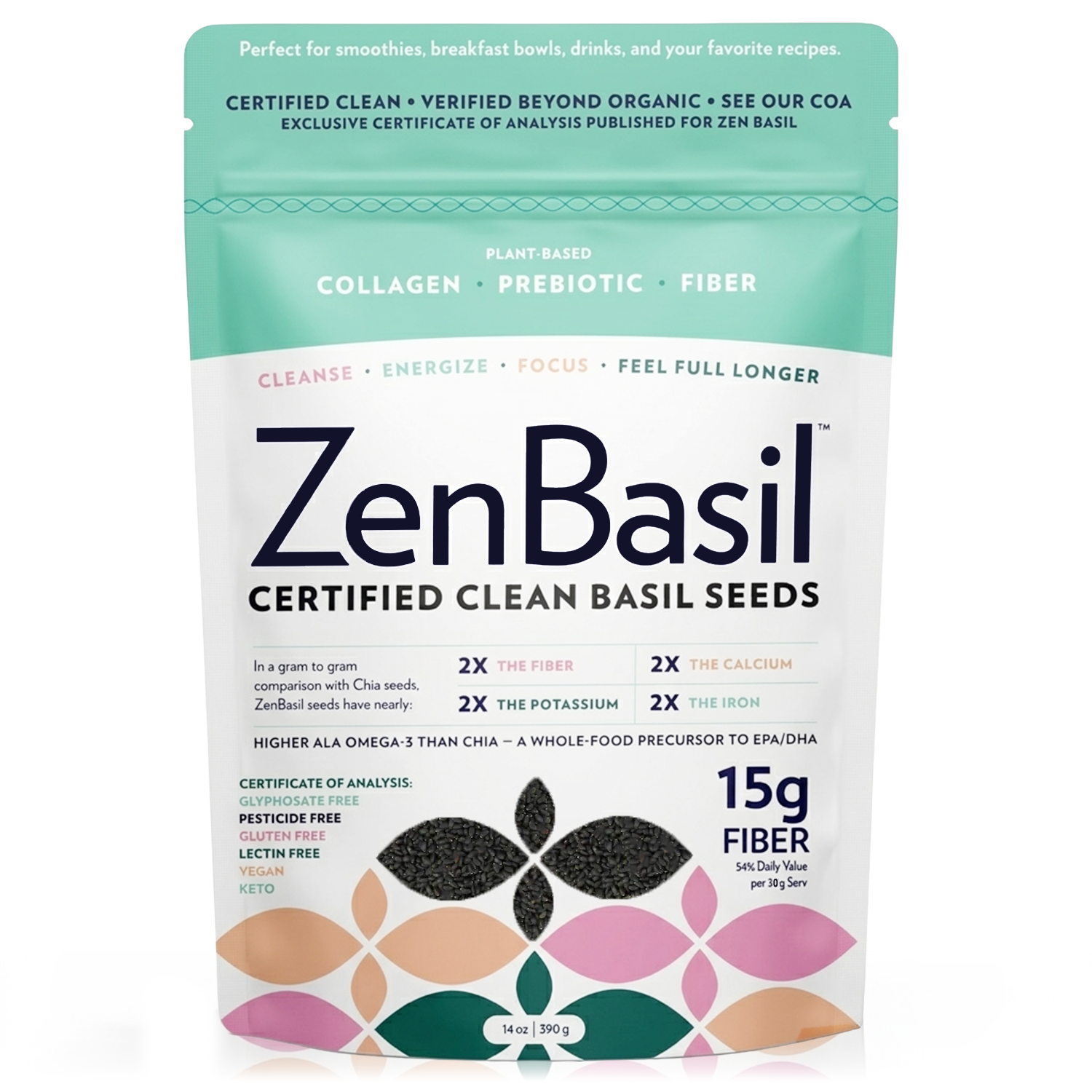
100% Edible Basil Seeds, Non-GMO, Lectin-free, Gluten-free, Plant-Based, Kosher, Vegan, Keto, Paleo | 15g Fiber Per 2 TBS | 14oz
Shipping Available Across U.S. Only
Canada Orders: Available on Naturesante.com: Nature Sante - Local Health Store +15k products
*These statements have not been evaluated by the Food and Drug Administration. This product is not intended to diagnose, treat, cure or prevent any disease.