GreenWise Organic Blueberries
The 2026 organic blueberry E. coli recall raises one basic food safety question:
Was the finished product tested after harvest?
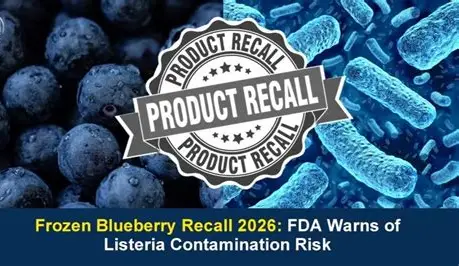
GreenWise Organic frozen blueberries and mixed berries sold at Publix were recalled during an FDA and CDC investigation into E. coli. The FDA classified the recall as Class I, its highest risk category. Twelve illnesses and four hospitalizations have been reported, with no deaths.
Consumers should check their freezers and follow the FDA organic blueberry recall instructions (https://www.fda.gov/food/outbreaks-foodborne-illness/outbreak-investigation-e-coli-o145h28-frozen-blueberries-july-2026).
The problem is not blueberries.
The problem is not that organic certification has no value.
The problem is that an organic logo does not prove that every finished product was tested after harvest for E. coli or other food safety hazards.
E. Coli Testing Should Be a Minimum Food Safety Standard
Pathogen testing is fundamental food safety.
For foods with relevant microbial risks, appropriate testing for E. coli, Salmonella, yeast, mold and other pathogens should be a minimum standard.
But food safety should not stop there.
A product may be certified organic and still travel through harvesting, washing, transportation, storage, processing and packaging before it reaches the consumer.
That is why testing the finished product after harvest matters.
Organic certification establishes important growing and handling standards. However, it does not require every finished lot to be independently laboratory tested after harvest and its results published for customers.
The Zen Basil Difference: We Go Beyond Organic
At Zen Basil, we do not stop with a certification or a logo.
We independently test every production lot after harvest, as close as possible to the form our customers will actually consume.
For every lot, Zen Basil publishes three separate laboratory reports:
1. Food Safety Testing
Our food safety testing evaluates the finished lot for relevant pathogens and microbiological concerns.
This is the basic starting point.
2. Testing for More Than 400 Pesticide Compounds
We test every lot after harvest using an extensive laboratory panel covering more than 400 pesticide compounds.
This goes far beyond simply showing customers an organic logo.
3. A Separate Glyphosate Test
Even an extensive pesticide panel does not automatically include glyphosate.
Glyphosate requires a separate and dedicated laboratory analysis.
In our opinion, glyphosate is one of the most concerning chemicals used in the modern food system. We do not expect customers to accept a “glyphosate tested” claim without evidence.
So we order the separate test.
And we publish that result too.
Three Reports Published for Every Zen Basil Lot
Food safety testing.
More than 400 pesticide compounds.
A separate glyphosate test.
All three reports are published for customers to review and verify.
That is the difference between telling customers a product is clean and showing them the evidence.
Most Brands Show You a Logo. Zen Basil Shows You the Results.
The majority of food brands do not publicly publish finished product laboratory results for every lot.
That does not automatically prove their products are unsafe.
It means customers generally cannot independently verify what the finished food was tested for or what the laboratory found.
The words “organic,” “clean,” “natural” and “third party tested” sound reassuring.
But they do not answer three essential questions:
Was the finished product tested after harvest?
What was it tested for?
Where are the results?
At Zen Basil, we answer all three.
Every lot is tested after harvest.
Every report identifies what was tested.
Every Certificate of Analysis is published for customers to verify.
What the Organic Blueberry Recall Can Teach the Food Industry
The organic blueberry E. coli recall should not frighten families away from blueberries or whole foods.
It should encourage customers to ask better questions and inspire food brands to provide better evidence.
Imagine if more brands tested every finished lot after harvest, tested for the risks relevant to that food and published the results for customers.
Testing cannot guarantee that a food safety incident will never occur. A laboratory can only evaluate the representative samples it receives.
But finished lot testing, complete traceability and published results can support earlier detection, faster action and greater accountability.
That would create a meaningful solution.
Organic certification is an important beginning.
Food safety testing is the minimum.
Testing beyond organic is the higher standard.
Publishing the results completes the promise.
Don’t Tell Me. Show Me.
Zen Basil does not ask customers to trust a logo.
We show you the food safety report.
We show you the pesticide report.
We show you the separate glyphosate report.
Three reports.
Every lot.
Tested after harvest.
Published for you to verify.
